
The 431 was an odd route, with an infrequent main service linking the ends at Sevenoaks and Orpington via Knockhold Pound, Halstead and Chelsfield, while a 431A variant did special journeys via Green Street Green instead of Chelsfield at peak times. The 431B did special workers' journeys between Knockholt Pond, Halstead and Fort Halstead via Otford Lane. The 431C worked between Knockholt Station and Fort Halstead at peak times. The 431D operated from Orpington via Green Street Green, Knockholt Station and Polhill, then to Dunton Green or Fort Halstead, at peak times, plus one single journey from Dunton Green to Orpington on Saturday afternoons!. Even the main 431 had a school-journeys variant to serve the community at Fort Halstead. The whole was an example of how closely the Country Area matched its flows to local requirements.
Today we were going to recreate some of the journeys, having received permission from the authorities to take two buses up to the main gate of Fort Halstead and back. No stopping at the gate, no photography. (Fort Halstead is one of those places that are not shown on Ordnance Survey maps).
RT3148 duly ran down from Knockholt Pound to Green Street Green as a 471, then ran past the Metrobus garage, up to the Farnborough roundabout, round it, and back down to the Queens Head. There the blinds were changed to 431C, and the passengers informed about the restrictions on photography.
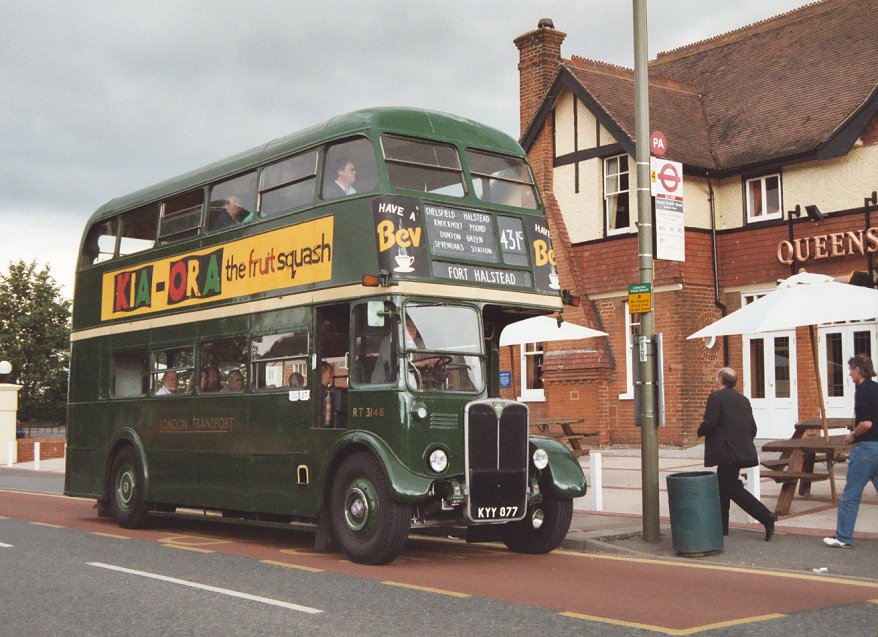
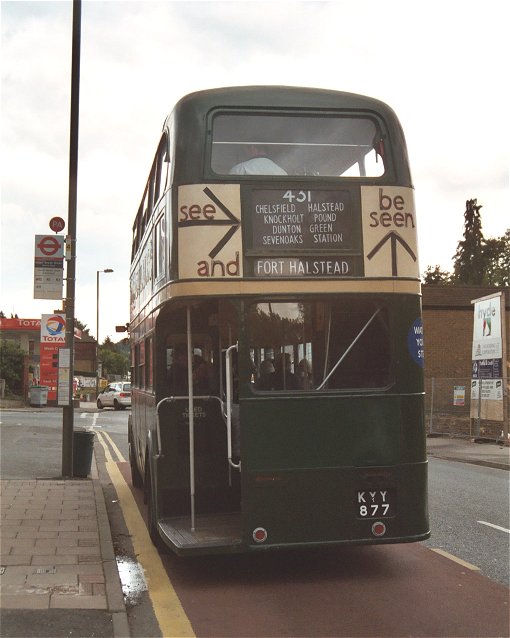
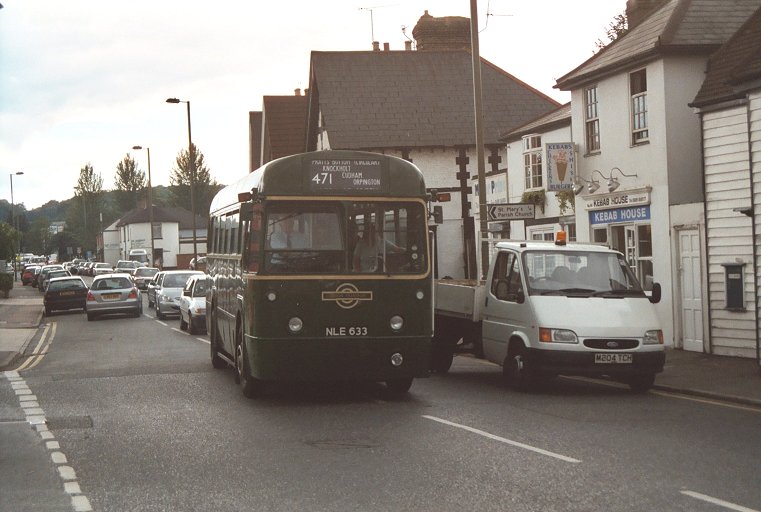
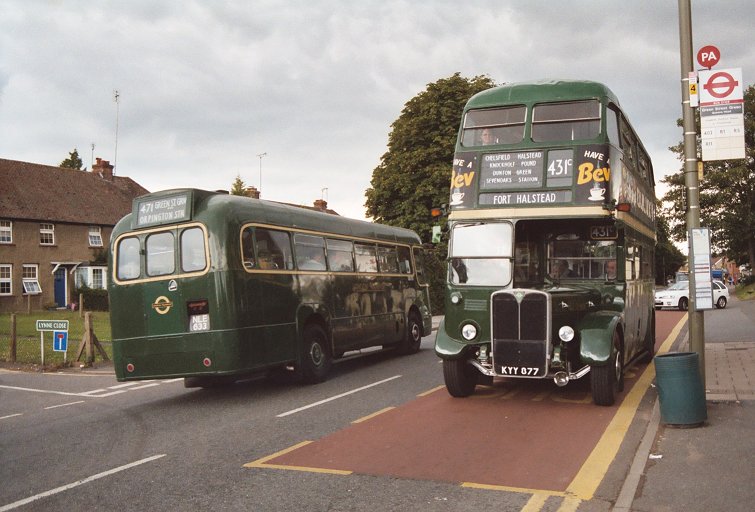
While photos were being taken at the Queens Head RF633 passed by on a 471 trip to Orpington. A sprinkling of rain added a little something to proceedings.
With Alan Charman at the wheel, RT3148 set off, along to the Green St.Green roundabout, then up the Sevenoaks road past Pratts Bottom to the Knockholt Station turn. There we took the old road up to Badgers Mount, where we paused for photos at the bus shelter. (The modern 402 still stops here, before turning sharp right up Shoreham Lane to visit Halstead and Knockholt Pound).
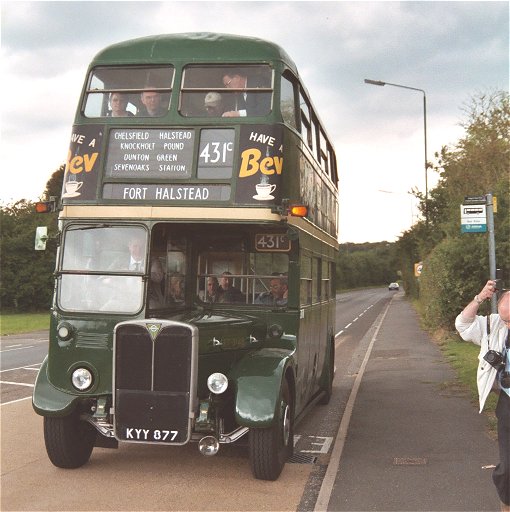
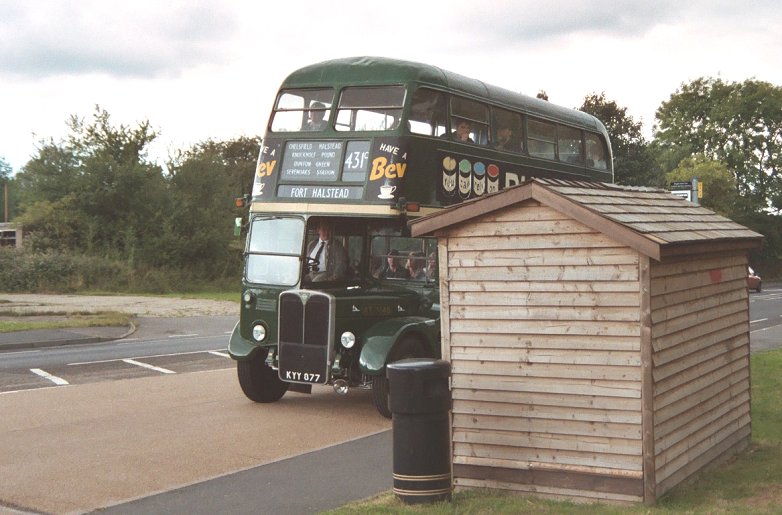
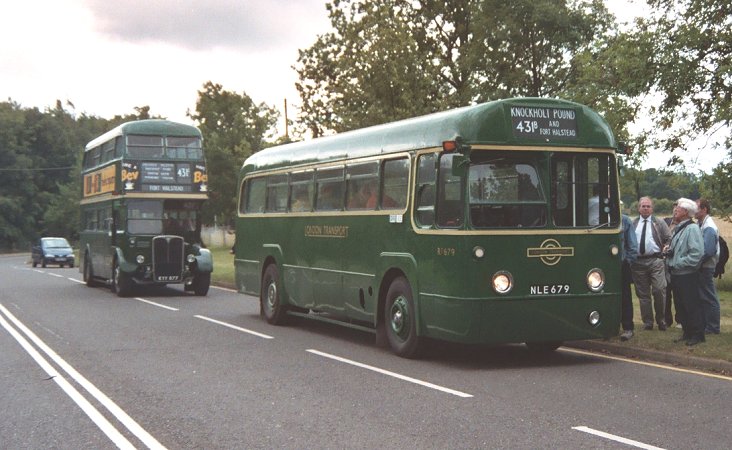
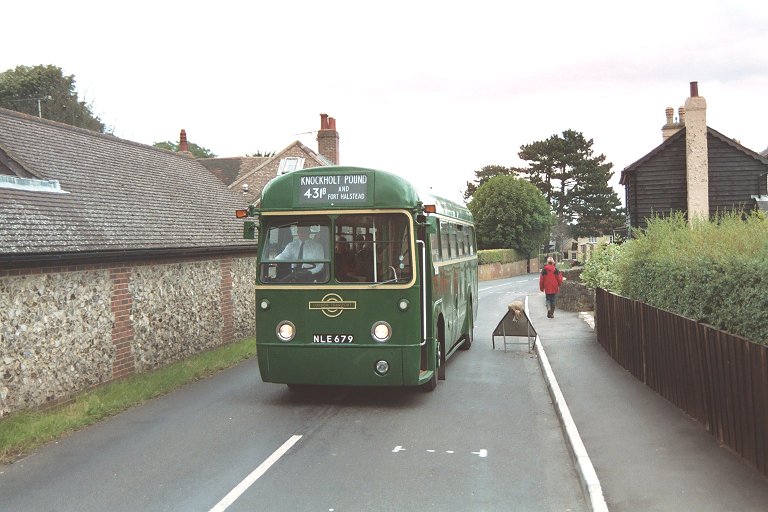
The restrictions on photography were reiterated, and we headed on up to the Polhill Arms, where we turned in to the Fort Halstead approach road. We drove up past the residential estate to the security entrance, passing exiting RF679 on the way, swept round the loop, and ran away.
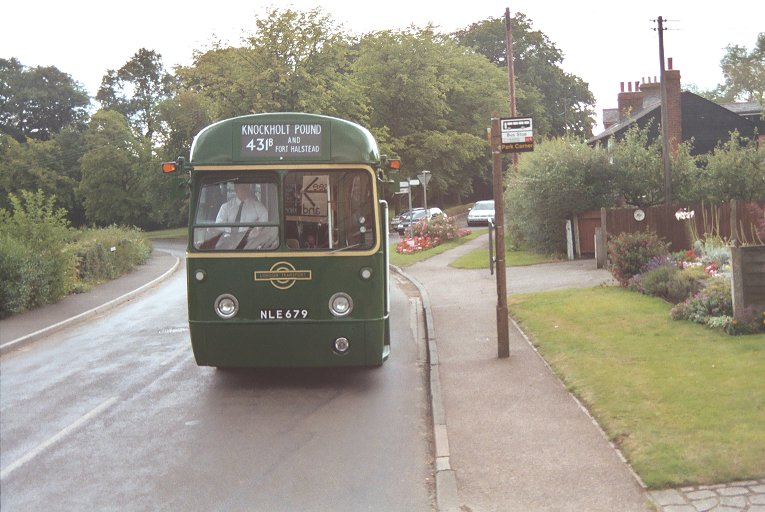
Back down at Polhill the two buses stopped at the exit onto the main road. RF679 had worked the other "special", the 431B from Knockholt to Fort Halstead via Otford Lane, and was now on the return leg. The RT was working down to Knockholt Station, before working back up through Halstead village to Knockholt Pound. There was a certain amount of passenger interchange.
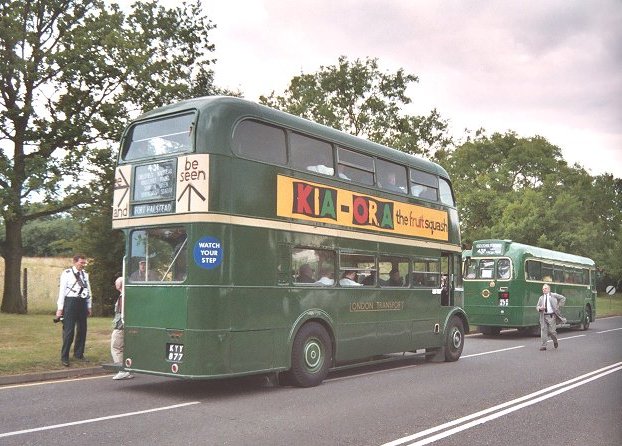
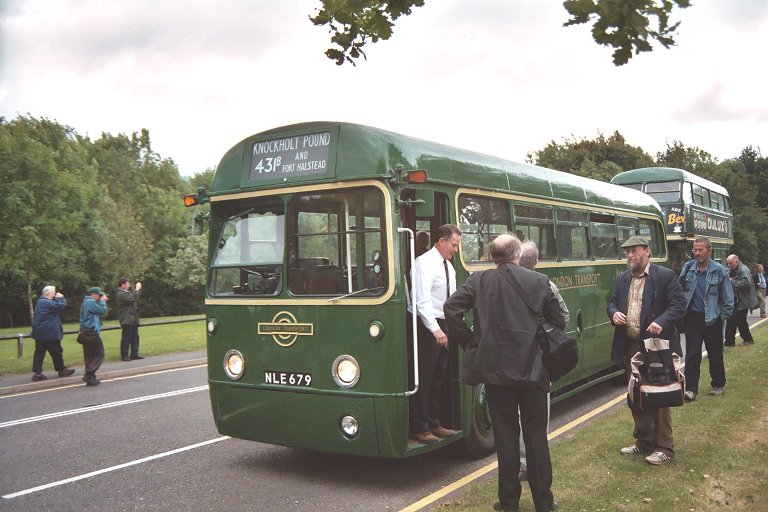
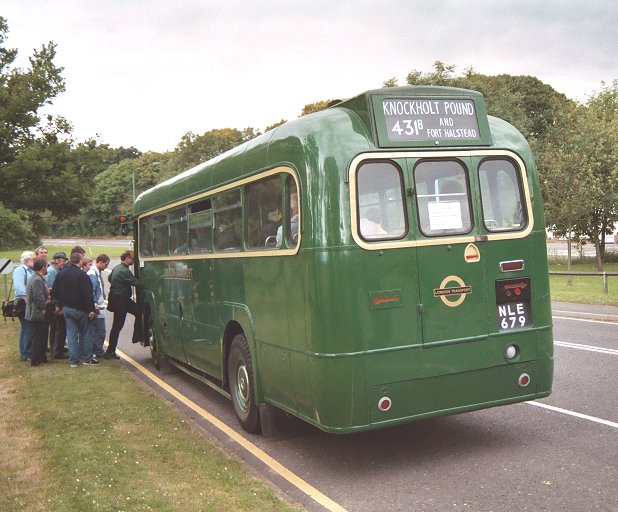
I continued with RT3148. We set off again, down towards Knockholt Station. Alan turned short, into Knockholt Road, and up into Halstead, where we waited by the end of Otford Lane for RF679 to reappear on the 431B. It took some time, as although more direct, the lane is somewhat overgrown. Even the RF had trouble negotiating it. But arrive it did, and the RT pulled forward across the junction.
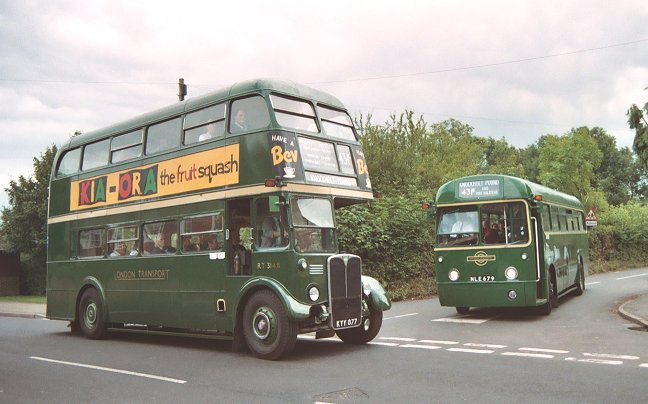
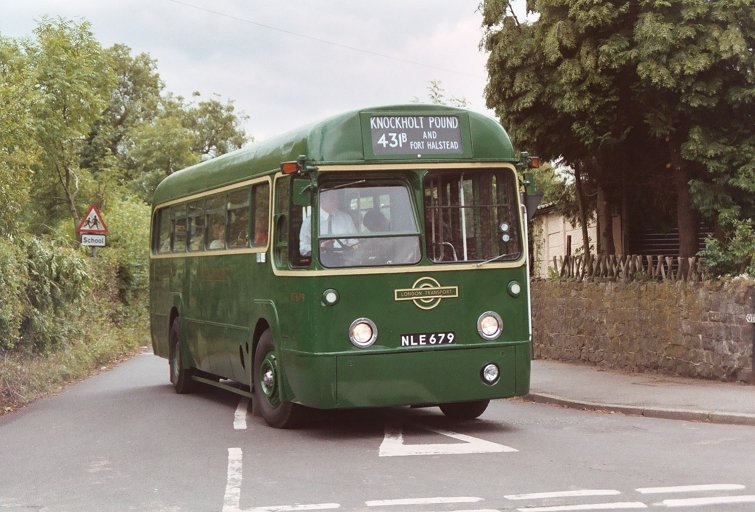
I crossed over to catch up with it, and the RF followed us up through the roadworks in the village, and onto Rushmore Hill. There is a bus-stop there, but this is in Kent, and still has a Kent bus-stop rather than an LT flag, even though the concrete post dates back to LT. We passed by, and climbed the last car-strewn stretch to the Pound.
All photos by Ian Smith. Click on most of them for a larger picture.
 Back to Ian's Bus-stop
 Part 3: Break at Bowen's Yard
 Part 5: Forays on 431/471